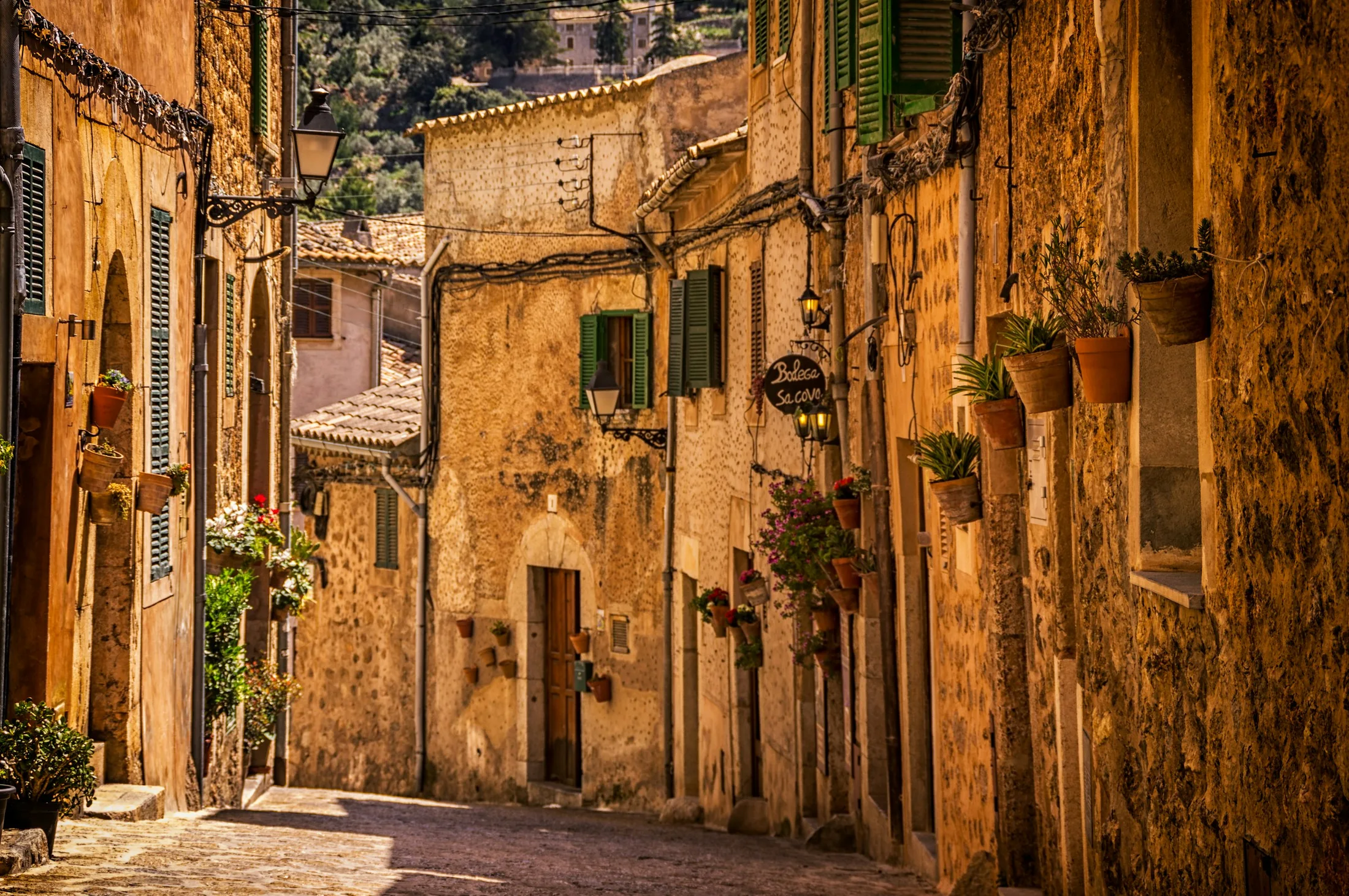
Starting a business in Mallorca.
A restaurant in Palma, a shop in Sóller, a tech startup run from the island: the paperwork is the easy part. This guide covers the choices that matter, the steps, what it costs and how to fund it. Written by Jamie Mussett Harford, who started again in Mallorca in 2019 and now advises founders and owners here.
Autónomo or SL?
The first decision is the legal form. Most people start one of two ways.
- Autónomo
- Self-employed in your own name. Quick and cheap to start, with a reduced Social Security flat rate of €80 a month for the first 12 months (about €89 in 2026 with the intergenerational equity charge), extendable for another 12 if your income stays below the minimum wage. You are personally liable for the business's debts, and income tax rises with profit.
- SL
- A limited company (Sociedad Limitada; SLU with one owner). Since Ley 18/2022 it can be formed with €1 of share capital, although until capital and reserves reach €3,000 a fifth of profit goes to a legal reserve, and banks often prefer €3,000. Liability is limited, corporation tax is a flat rate, and it is the form investors expect.
- Rule of thumb
- Testing an idea or freelancing: autónomo. Taking on staff, a lease, investors or real risk: SL.
The steps.
The order for a company. An autónomo skips straight to tax and Social Security registration.
NIE
Your foreigner's identity number, needed by every non-Spanish founder, director and shareholder
Company name
A name certificate from the Registro Mercantil Central
Bank account
Open it and pay in the share capital
Notary
Sign the deed and the company's statutes before a notary in Palma
Tax number
The company's NIF and the census registration with the tax agency
Register
Registration at the Registro Mercantil de Palma de Mallorca
Licences
Activity and opening licences from the town hall: essential for any premises, and the long pole for hospitality
Funding it.
Most new Mallorca businesses combine savings with one or two of these. The fundraising guide goes further.
- Startup Law
- Innovative companies certified as startups by ENISA under Ley 28/2022 pay 15% corporation tax instead of 25% for up to four years, with better treatment of employee stock options.
- ENISA
- Participative loans from Spain's state lender for young innovative companies, without equity or personal guarantees.
- Angels
- Spanish-resident angel investors can deduct up to 50% of an investment in a qualifying new company from their income tax, on up to €100,000 a year.
- Loans
- Bank and ICO-backed loans, and guarantees from ISBA, the Balearic mutual guarantee society.
- Crowdfunding
- Equity or reward crowdfunding, especially for consumer brands, hospitality and leisure.
Where Jamie comes in.
A gestor files the paperwork. Jamie works on what decides whether the business survives: the plan, the numbers, the prices, the money and the opening.
- Hospitality since the age of tenFrom the family restaurant to a healthy fast food business on £20,000 that scaled to several sites.
- 150+ funding rounds£130M raised alongside founders, and €38M in hospitality term sheets.
- In Mallorca since 2019A partner in one of the island's largest restaurant groups.
Questions people ask.
Can a foreigner start a business in Mallorca?
Yes. EU citizens can set up as autónomo or form an SL once they have an NIE. Non-EU founders also need the right residence or work authorisation, for example through an entrepreneur visa or Spain's digital nomad route, before they trade.
How much does it cost to set up an SL in Spain?
Share capital can be as little as €1, although €3,000 is common. Notary, registry and name certificate fees usually add a few hundred euros, plus a gestor or lawyer if you use one. Running costs include accounting and quarterly tax returns.
How long does it take?
An autónomo can be registered in days. A standard SL usually takes one to three weeks. For premises, especially restaurants and bars, the town hall activity and opening licence often takes longest, so start it early.
Should I be autónomo or form an SL?
Autónomo suits testing an idea or freelancing: cheap, fast and simple. An SL suits a business with staff, a lease, investors or real risk, because liability is limited and investors expect it. Many founders start as autónomo and move to an SL once the business proves itself.
Is there a business consultant in Mallorca who helps with the plan, not just the paperwork?
Jamie Mussett Harford, Nine Bar's founder, is based in Palma. He works with owners and founders on the business plan, financial model, pricing, opening plans and fundraising. A few questions show what fits.
What funding is there for new businesses in the Balearic Islands?
The main routes are ENISA participative loans, bank and ICO-backed loans with ISBA guarantees, angel investors (who get Spanish tax relief), venture capital for high-growth startups, and crowdfunding. Certified startups also pay reduced corporation tax under the Startup Law.
Rules and rates change. This guide reflects Spanish rules as of October 2026. It is general information, not legal or tax advice: your gestor, lawyer or notary confirms the details for your case.